Wednesday, July 31, 2013

Inflation-targeting, CPI measures and the poor

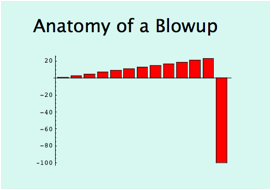
In a bid to get back to regular blogging, below is a comment that I've just left under a Daily Maverick column by Paul Berkowitz, entitled "Who benefits from inflation-targeting?" It includes the following provocative graph on the relative inflation levels faced by different consumer groups in South Africa.


___

There are a number of legitimate reasons to critique an inflation-targeting regime. Further, the relatively high inflation burden felt by poorer segments of society certainly merits attention in of itself. That said, there are some persistent misconceptions among the public about inflation-targeting: What are its goals and what are the (theoretical) mechanisms by which these are achieved -- particularly w.r.t. a central bank's chosen CPI measure? My gripe with this article is that it may perpetuate such misconceptions by failing to acknowledge an important principle of inflation-targeting.

Rather than simply being an end in of itself, an inflation target is also seen as a means of stabilising the output gap (and ultimately smoothing of the business cycle). Theoretical justification for this so-call "divine coincidence" -- which implies no trade-off between the twin goals of stabilising inflation and maintaining optimal economic output -- is derived from the standard new Keynesian DSGE models favoured by a large segment of macroeconomists. See Blanchard and Gali (2005), or as Blanchard has written elsewhere:
This is a really important result. It implies that central banks should indeed focus just on inflation, and can sleep well at night. If they succeed in stabilizing inflation, they will automatically generate the optimal level of activity. (p. 3)
The upshot is that, if we are going to criticize the representativeness of headline CPI for all income groups, then we should at least acknowledge it's (intended) wider role in stabilising the output gap. (The CPI basket is chosen, after all, because it corresponds to average purchases within the economy as a whole.) You can certainly argue about the conditions under which "the divine coincidence" is satisfied, as well the theoretical underpinnings of the DSGE models. However, closing the output gap is probably very much in the poor's interest as well.

On a final and related note, there are severe drawbacks to the SARB targeting a predominantly commodities-based basket that would more closely accord with the average purchases of low-income families. Most obviously, the SARB is more or less powerless to control the inherent volatility of commodity groups, not to mention the potential for causing very counterproductive amplifications in the consumption cycle. (See here, esp. end of point 4.)

Saturday, July 27, 2013

Personal note

I'm not normally one for broadcasting personal information and relationship updates on social media, but, hey, this a big one.

Very pleased, then, to say that I am recently returned from a trip to Veneto, Italy, engaged to the beautiful Miss LB. (Soon to be Mrs LM, although a rose by any other name...)

My five-year charm offensive has obviously paid dividends. 
Finally. 

In other news, Daniel Kuehn was kind enough to remind me on Facebook that I shouldn't make the mistake of thinking that my probation period is now over... Sage advice.

Sunday, July 7, 2013

Music updates

My latest contributions to Noondaytune are a mix of classic rock and Nordic lo-fi (complete with a youth choir). Something for everyone!

1) Crosby, Stills, Nash & Young - "Almost Cut My Hair"

2) Mr Little Jeans - "Oh Sailor"

Friday, July 5, 2013

It's not every day that you're called an idiot by Nassim Taleb

Or a "bloggist" for that matter.

Here and here.

To be fair, Taleb has charged that many minds superior to my own are beset by idiocy, so I'm in reasonable company. More seriously, he did at least tone down his bombast when I pointed out that he had misunderstood what I was asking.

The background is this post, where I wondered (quite respectful like!) what Taleb made of the research that shows people have a tendency to overestimate the likelihood of low-probability events if they were framed in highly dramatic terms. This seemed to run counter to a recurring theme in his writings, which is that people are blind to "black swans"... basically that they consistently underestimate low-prob, high impact events.

Taleb pointed me towards a short paper on "binary" (up vs down) versus "vanilla" (+500 vs +5,000,000 vs -5,000,000) outcomes, which was supposed to refute the relevance of such studies. However, I remain rather unconvinced. Consider the key figure in my previous post:

Perceived versus actual fatalities. Adapted from Lichtenstein et al. (1978).

As I wrote back then: What we see here is that people have a clear tendency to overstate -- by an order of several magnitudes -- the relative likelihood of death arising due to "unusual and sensational" causes (tornadoes, floods, etc). The opposite is true for more mundane causes of death like degenerative disease (diabetes, stomach cancer, etc).

Now, I certainly agree with Taleb that it is important to distinguish between between binary and continuous outcomes. Asking whether a stock will go up/down is a much less interesting (and less complex) question to ask than whether it will go up/down by a certain amount. You are clearly not comparing apples with apples if you say that a stock will go up by 5% or 500%. In short, binary and continuous ("vanilla") outcomes are incommensurable in terms of evaluating payoffs.

However, the studies that I linked to are interesting exactly because they are comparing the *same* outcome (i.e. death). It makes no sense to say that death by tornado equals five times death by stroke. They are obviously equivalent. The "payoff" is thus the same because the outcome is the same. Further, I'm not claiming that the insights from these particular studies are fully generalisable to all other low probability, high-impact outcomes (especially those in finance). Yet they do show that underestimation of black swan events is hardly a universal phenomenon either... In fact, people here are shown to rely on heuristics that lead them to a diametrically opposite conclusion! I was ultimately interested in hearing from Taleb whether he thinks these heuristics are efficient or not. I didn't get an answer unfortunately, so I guess we'll have to judge for ourselves.

A final observation is that I disagree with the paper's assertion that "binary is limited to probability". (In other words, that binary outcomes say nothing about the size of a payoff.) This is certainly true in many cases -- again, especially in finance -- but not always. In some instances, binary outcomes imply payoffs directly. The obvious example is the one that we have been discussing in this very post, i.e. death. Indeed, I would think that Taleb probably agrees with me, given that one of his favourite analogies is that of a turkey being fattened up in preparation for Thanksgiving.

What Taleb calls his "classical metaphor". A turkey on his way to becoming dinner. (Source)

With apologies to Monty Python, you might say that the prospect of becoming an ex-turkey implies a very obvious payoff indeed.

UPDATE: Andrei Shleifer agrees.

Tuesday, June 11, 2013

Happenings

Given the inadvertent success of my previous post, I've decided to take the philosophical route for this next one: My fifteen minutes of quasi-blogosphere fame are almost certainly up and so it's time to resume normal services!

With that in mind, here are some mundane reflections on the last two weeks or so:

1) I wrote what should be my final ever (ever ever) sit down exam at the end of May. The subject was philosophy of science and, despite some frustrations, I enjoyed spending time on something that is outside of my normal field of expertise. I have now effectively completed my coursework requirements for the PhD -- both compulsory and elective credits -- and should be able to concentrate on the research side of things. Basically, I've got two years to finish the remaining two chapters in my dissertation and thus, thankfully, in a pretty good position at the moment.

2) My final article on natural gas and the environment was published at The Energy Collective. Having taken on short- and long-term carbon emissions, followed by demands placed on freshwater resources, this one looked at whether fracking can cause earthquakes? (Short answer: Yes, but you'll hardly notice them.) The issues surrounding natural gas and fracking are obviously very contentious. Important research is ongoing and I certainly don't expect everyone to be fully swayed by my articles and arguments. However, having spent a lot of time researching these matters -- giving primacy to the peer-reviewed scientific literature in the process -- the following paragraph provides an accurate summary of my overall impressions: "The takeaway is consistent with the overarching theme of my series. Yes, there are environmental trade-offs to securing the benefits of fracking and natural gas at large. Placed into the right context, however, these are relatively benign and often much better than the immediate alternative. Economics teaches us that there is no such thing as a free lunch, but fracking looks like a pretty good deal to me."

3) Not everyone was happy with the above article and I was involved in some amusing (not to mention ironic) Twitter spats. I'll summarise one of these for you:
@grant_mcdermott: "Does fracking case earthquakes? (link) Yes, but they're so small that you won't notice them."
@LoveCanal2020: "Whatevs! Shell sponsored that post. You're just a shill!"
@grant_mcdermott: "Ad hominem much? Actually, Shell have nothing to do with the content of my article. By all means though, don't address any facts."
@LoveCanal2020: "Meta-analysis Mumbo-jumbo! LOUD NOISES!"
@grant_mcdermott: "Yes. Science. As opposed to anecdotes, wild accusations and LIBERAL use of CAPITAL LETTERS."
@LoveCanal2020: "Criticize my creative use of capital letters, eh? Typical ad hominem!"
@grant_mcdermott: "Ad hominem?? I criticised your emotional outburst in lieu of actual facts."
@LoveCanal2020: "Still counts as ad hominem. #philosophy101"
@grant_mcdermott: "#philosophy101fail" 
etc

4) I'm spanning the genres for my latest song contributions to www.noondaytune.com: The Meters - "It Ain't No Use" and M83 (feat. Susanne Sundfør) - "Oblivion".

Monday, June 3, 2013

Econ blogosphere comment form

There is no cake-stagnation by Tyler Cowen 

Here. Paul Krugman writes about the virtues of black forest cake versus regular vanilla sponge. While I disagree with Paul on the merits of chocolate chip distribution, I found this to be an enjoyable piece.

Caveat emptor, but do read the whole thing.

PS - Humblane S. Arcadian has written a beguiling book on the bakery practices in pre-industrial Abkhazia. Self-recommending.

____
Comments

Scott Sumner: I thought we had all agreed that if you have not reached your cake eating target, then by definition you are not eating enough cake.

Aziz: In the future, all cakes will be produced using solar-powered 3-D printers.

Greg Ransom: Hayek believed that prices were important because they conveyed information. Note well, cake prices are prices in inter-temporal disequilibrium. Scott writes: "by definition you are not eating enough cake".

Noahpinion. Derpity derp derp. #kthxbye

Unlearning Econ: When you get down to it, Cake Libertarianism is just Cake Marxism without the good bits.

Brad DeLong: Niall Ferguson is the stupidest man alive. Yours, Brad DeLong.

Major Freedom: OMG. LOL. Krugman is such an idiot. He doesn't understand the... [several lengthy paragraphs later] ... human-action axiom.

Lord Keynes: Major Freedom is a risible liar. These figures from Davidson et al. show that Hayek failed in his account to justify a natural cake rising rate. C.f. The arguments of Sraffa (1932).

Major Freedom: LK, why do you hate freedom?

Blue Aurora: Dear Firstname Lastname, have you read Dr Michael Emmett Brady on optimal cake consumption? PS - Did you receive my email?

Bob Murphy: Whaaaat? This is a typical Krugman Kupkake Kontradiction. Look at this recipe from Martha Stewart (link). I'm not saying that the data say I'm right. I'm saying that the data say I'm not wrong in a way that says Krugman is not totally right.

Daniel Kuehn: I'm puzzled by the reference to Wicksillian cake recipes within a Kaleckian framework. This just seems an opportune moment for navel gazing by the Kaldorian's to me.

Steve Keen: What the neoclassical cake theory fails to acknowledge is that Hicks rejected his initial recipe formulation in later life. Minsky taught us that baking is de-baking. Also, I predicted the crisis.

Grant McDermott: It's such a pity to see people neglect the in situ evaluation of cakes. Just ask yourself whether "flour" is the same thing as "a flower"? The answer, I trust, is self-evident.

Sunday, June 2, 2013

Are there any four-minute miles in economics?

3:59.4

Roger Bannister's four laps of the Iffley Road Track on 6 May 1954 have been immortalised in the annals of sporting lore and human achievement. By becoming the first man to run a sub-four minute mile, he had broken the "impossible" barrier and so made clear the importance of mind over matter. Athletes from all over the world would soon replicate Bannister's feat now that he had liberated them from their mental shackles...

Except... no. The problem with this romantic narrative is that it has been hopelessly embellished. The idea of a four-minute "barrier" was almost entirely the invention of the media, which fanned the idea to sell papers as runners increasingly closed in on the mark. Wikipedia (indulge me) puts it quite nicely:
The claim that a 4-minute mile was once thought to be impossible by informed observers was and is a widely propagated myth created by sportswriters and debunked by Bannister himself in his memoir, The Four Minute Mile (1955). The reason the myth took hold was that four minutes was a nice round number which was slightly better (1.4 seconds) than the world record for nine years, longer than it probably otherwise would have been because of the effect of World War II in interrupting athletic progress in the combatant countries.
I was reminded of this yesterday, as my Twitter and Facebook feeds were flooded by excitable and angry complaints about the Dollar-Rand exchange rate breaching the symbolic threshold of 1:10.

Source: Bloomberg

Now, to be sure, the Rand is at it's weakest level for several years following a number of social upheavals, government scandals and political infighting, questionable economic policy, and wider trends in emerging markets. (Here, here and here for more context.) I should also say that I am not endorsing a "weak Rand" strategy here in any shape or form. I am, however, interested in the question of whether a 1:10 exchange ratio is significant in of itself.

Put differently, do we have reason to believe that the Rand's rate of depreciation will accelerate further as a result of having passed this threshold? I must confess that I don't see it. That's not to say that further depreciation can't happen, but rather: a) That would be the result of existing economic fundamentals rather than surpassing some magic metric mark, b) A full-blown currency crisis seems very unlikely from my perspective. (If nothing else, the South African Reserve Bank is on record as saying that they will tighten policy in the advent of further weakening, although that remains very open to interpretation.)

Moving beyond the case of the USD-ZAR exchange rate, the notion of thresholds pervades much of economics and finance... Or, at least, it pervades talk about economics and finance. Consider, for example, some of the headlines from recent weeks concerning the fall of gold prices to below $1,500 and then $1,400 per ounce... or the brouhaha surrounding that Rogoff-Reinhart paper and their fabled elusive "90 percent" cut-off rate for debt-to-GDP ratios and its supposedly dire consequences on economic growth.

Some of this -- let's call it -- threshold affinity in economics and finance could be justified by underlying factors, such as physical laws, regulatory limits, etc. However, most of it is probably just good copy for selling financial news. At worst, it may even be self-referential nonsense designed to confuse lay investors and the general public. Here are two stylised explanations for why "round number" thresholds shouldn't matter in of themselves:
  1. Valuations should ultimately be set according to economic fundamentals. These would not be much different for a stock or trade that is valued at, say, R9.90 versus R10.10.
  2. An alternative reason is that traders don't target levels per se. Rather, they target the levels implied by momentum and trend lines (with predefined margins of safety), or algorithmic strategies (which are similar in principle). There's no a priori reason to think that these implied levels will accord to nice round numbers.
Having said that, market psychology can obviously work very differently to the cool, rational calculations implied by standard theory. "Round numbers" will become important, as long as enough people believe them to be important. More precisely, symbolic levels will gain significance if I believe that other people regard them as being significant. (Ye old beauty contest story.) It should also be said that even standard theory does not suppose that change should evolve in a linear fashion...

Let me end this post by saying that I haven't bothered with any kind of literature research; I'd be interested in hearing about studies investigating this type of phenomena. Alternatively, if not much has been done and someone is interested in looking at it further... drop me a line. Two possibilities for checking the existence of "four-minute mile" numbers is that they should act as focal points or thresholds. For the former, we would expect data to bunch around particular levels from both above and below. For the latter, we would expect a discontinuity in the rate of change for a particular stock or currency valuation (i.e. once a threshold is breached). Several ways of testing this empirically immediately spring to mind.

Tuesday, May 21, 2013

I, for one, welcome our new technocratic, environmentalist, socialist overlords

Any group that successfully manages to perpetrate a hoax involving tens of thousands of individuals from all over the world... would sure be able to elect a politburo of unimagined efficiency.

Ninety-seven percent agreement collusion conspiracy among climate scientists? One can only imagine how effortlessly they will get the trains to run on time, or tame the business cycle.

The future never looked so bright.

[Note to self: File under right-wing paradoxes.]

Friday, May 17, 2013

Video - Fracking chat with David Zetland

I had a long video chat with David Zetland yesterday, where we discussed fracking, water pollution, property rights and a bunch of related issues. David's take on our talk is here.

Like many people, I find it very difficult to watch/listen to videos of myself. (Where did all those mannerisms come from??) Still, if you've ever wondered what a real South African accent sounds like, you're in for a treat!

In related news, the below video will act as supporting evidence for my submission as "the palest man in economics".